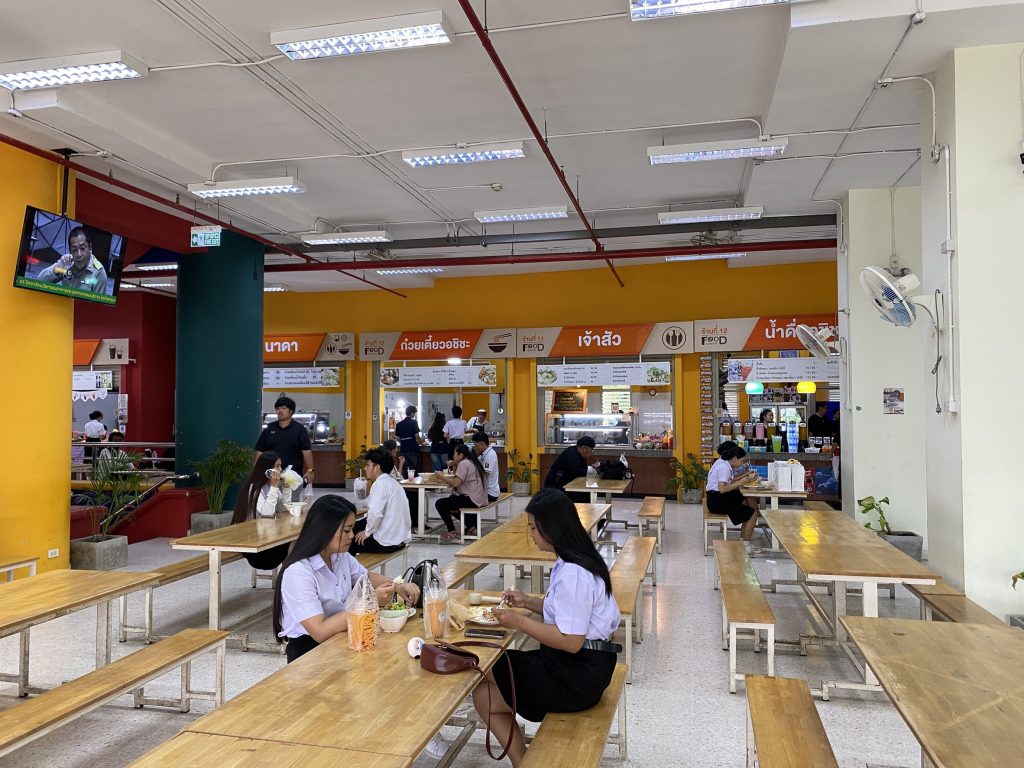
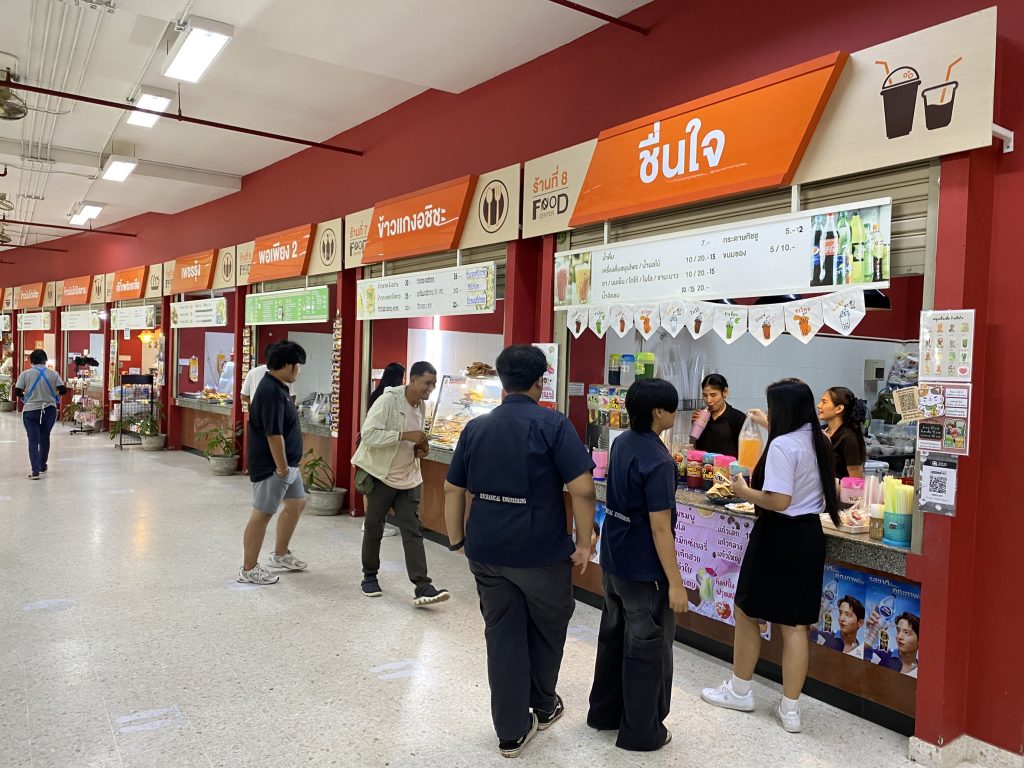
Phetchaburi Rajabhat University provides a variety of accessible and inclusive food options on campus to promote sustainable and healthy eating. The second floor of the Niwat Samorsorn Building serves as the main food center, comprising 10 food stalls, 2 beverage shops, Centennial Kitchen (The PBRU Heritage), the Phetchaburi International Culinary School, and one convenience store. These facilities offer diverse menus that cater to different dietary preferences, including Halal food for Muslim consumers and vegetarian meals for health-conscious individuals or those who avoid animal products.
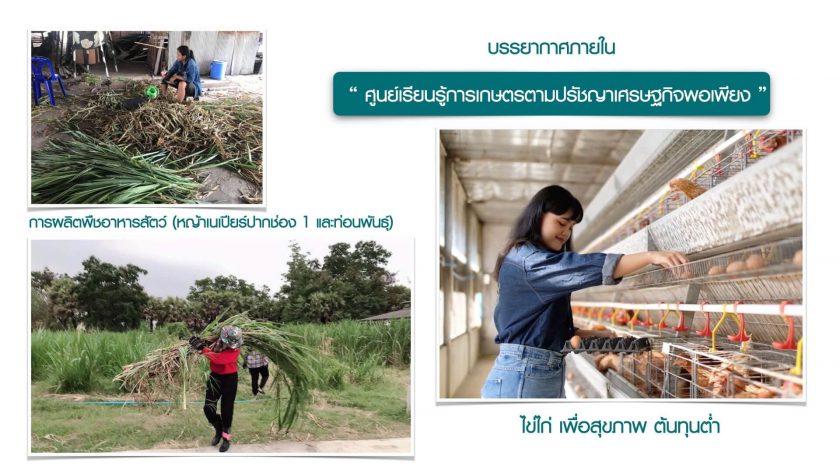
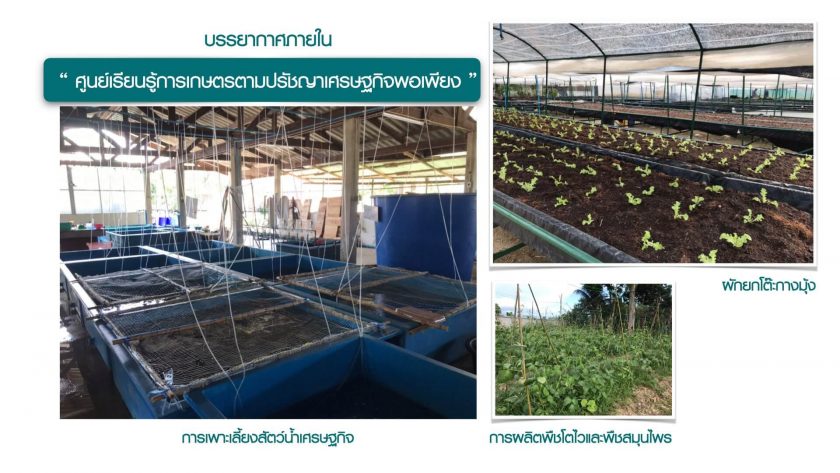
In addition, Phetchaburi Rajabhat University established the Sufficiency Economy Agricultural Learning Center to produce safe and sustainable food for students, staff, and the community. The center operates under the collaboration of the Faculty of Agricultural Technology, Faculty of Management Science, Faculty of Humanities and Social Sciences, Faculty of Engineering and Industrial Technology, Faculty of Nursing and Health Science, and other university units. It also cooperates with external agencies to develop participatory organic farming demonstration areas following the Participatory Guarantee System (PGS), SCE-PGS standards, and the New Theory Agriculture principles of the Land Development Department.
The center integrates multiple agricultural disciplines, including:
Crop production: fruits, vegetables, herbs, mushrooms, and ornamental plants
Aquaculture: economic aquatic species such as catfish and seaweed
Livestock: laying hens, pigs, cattle, goats, and animal feed production
These operations encompass the entire agricultural value chain—from pre-harvest and production to post-harvest and distribution—aiming to ensure a sustainable and safe food supply for the campus. The center also serves as a hub for research, knowledge transfer, and agricultural technology development, while providing high-quality raw materials and products to both the university and local farmers. This initiative strengthens the local economy and supports sustainable lifestyles within the community.