SDG 2 Zero Hunger
2.5.3 University Access to Local Farmers and Food Producers
Phetchaburi Rajabhat University serves as a vital community resource, acting as a center for knowledge exchange, capacity building, and academic services for local farmers and food producers. The university provides continuous and sustainable support through both free and paid services, aiming to strengthen local agricultural systems and enhance community livelihoods.
- Academic Services and Laboratory Facilities
The university offers comprehensive laboratory analysis and testing services, including water, wastewater, soil, fertilizer, and food quality analysis. These services are available to farmers, local food producers, organizations, and government agencies both within and outside the university.

Additionally, Phetchaburi Rajabhat University provides access to scientific instruments and research facilities, as well as training workshops and knowledge transfer activities focused on food processing, agricultural quality improvement, and product innovation for those interested in developing local agricultural enterprises.
- Agricultural Development through Technology and Innovation
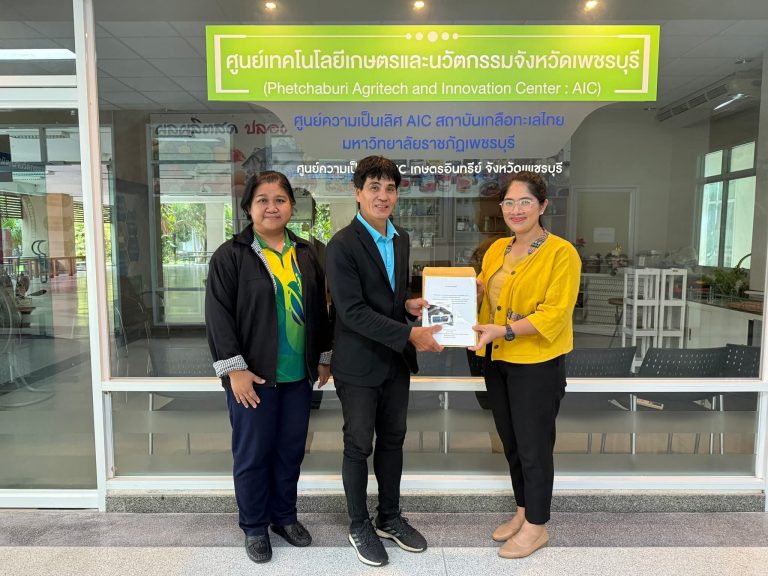
The university operates the Agritech and Innovation Center (AIC), which functions as a hub for agricultural technology services and innovation transfer. The center supports production efficiency, value addition, and quality standard enhancement of local agricultural products.
Moreover, the university implements a five-year initiative—Center for Agricultural Products Phetchaburi—aimed at developing agricultural machinery, agri-innovation, and mechanization systems, while also serving as a training and incubation center for Smart Farmers and Young Smart Farmers.
These initiatives are conducted in collaboration with the Department of Agriculture and the Phetchaburi Provincial Office of Agriculture and Cooperatives, ensuring the integration of academic expertise, technology, and practical applications to drive sustainable agricultural development in the region.
- Promotion of Well-being and Quality of Life at the Grassroots Level
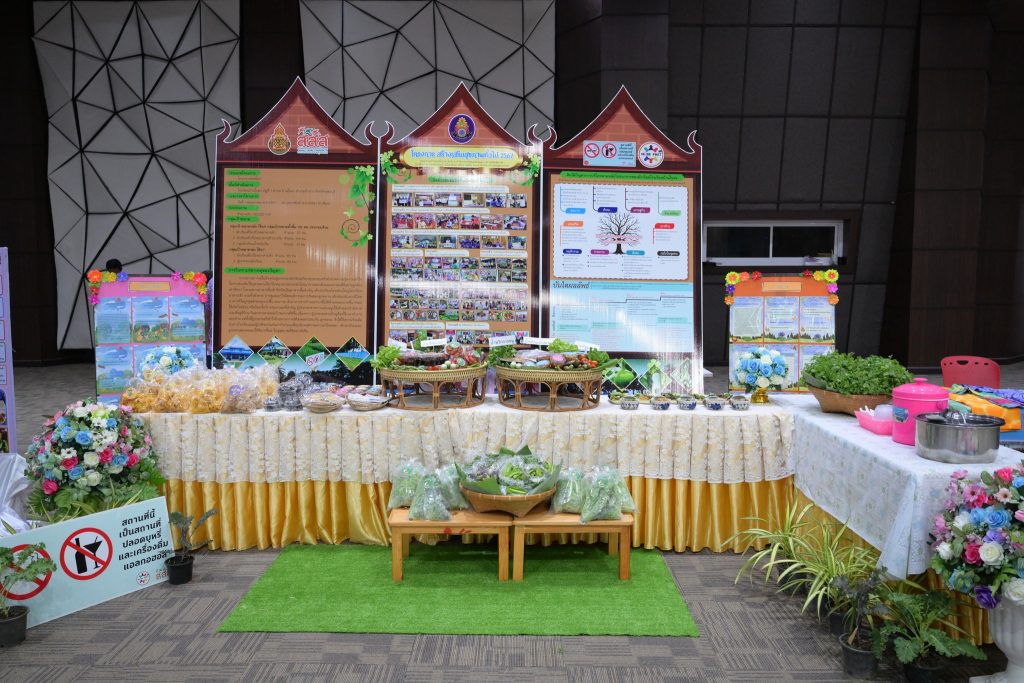
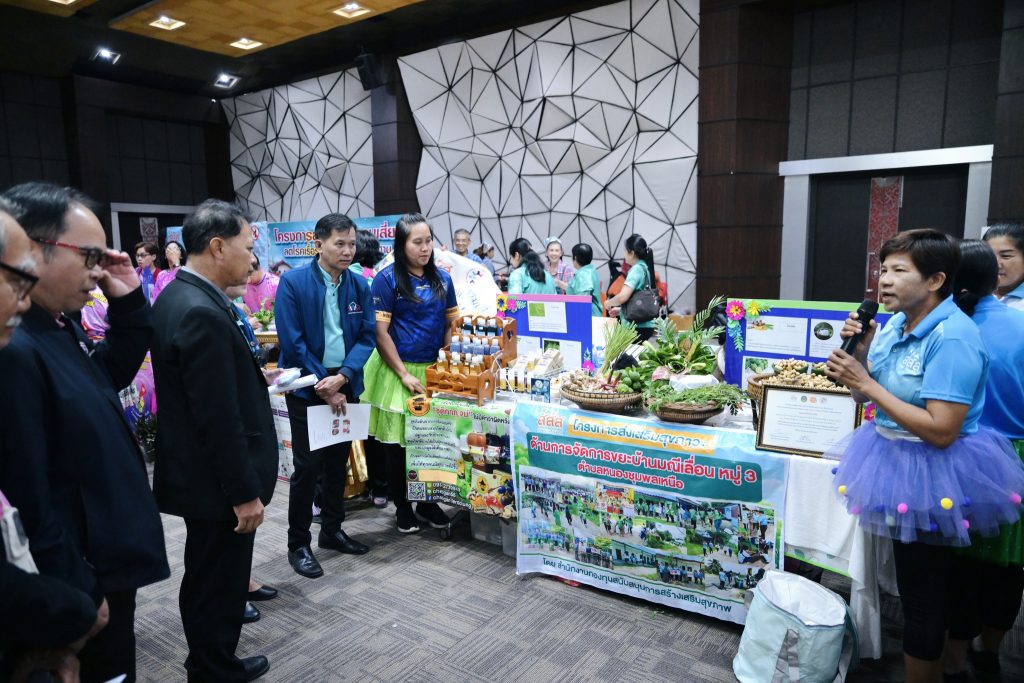
Phetchaburi Rajabhat University, in collaboration with the Thai Health Promotion Foundation (ThaiHealth), established the Node for Small-Scale Area Development Projects (NODE) to enhance community well-being and quality of life across 30 local areas in Phetchaburi Province. The initiative focuses on the following key areas:
– Promoting household cultivation and consumption of pesticide-free vegetables
– Elderly health promotion and active aging programs
– Reducing risk factors for non-communicable diseases (NCDs)
– Improving students’ nutrition and fruit–vegetable consumption
– Community waste management and environmental sanitation
– Reducing or eliminating alcohol and tobacco consumption
– Managing high-risk areas to prevent community accidents
- Conservation and Development of Local Cuisine
The university, in collaboration with local cultural networks, organized the event “100 Dishes, Temple Fair, 100 Years of Phetchaburi Rajabhat University”, to promote local culinary heritage and cultural identity. The event positioned the university as a knowledge hub for local gastronomy, featuring research, documentation, and training workshops for local cooks and community food entrepreneurs.
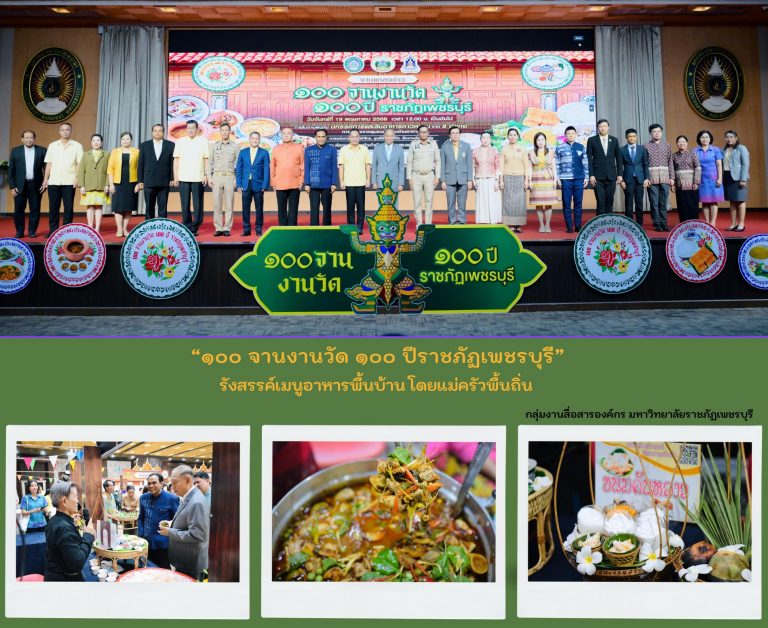
These efforts aim to preserve and develop traditional food culture sustainably, while also supporting creative agricultural product development to enhance competitiveness and commercial potential for community enterprises.
- Promoting Sustainable Community Economy
Phetchaburi Rajabhat University strives to create sustainable development opportunities for local farmers by:
– Developing reliable and sustainable agricultural markets
– Building provincial agricultural product brands to strengthen local identity
– Promoting agrotourism across all districts in Phetchaburi Province to generate income and improve community well-being
Through these initiatives, the university fosters a sustainable local economy that integrates agriculture, culture, and tourism, ensuring both economic stability and quality of life improvement for rural communities.